Most visitors to Chattanooga know Chickamauga Lake, the big water above the dam on the city’s north side. Fewer know what happens below it. Downstream, the Tennessee River slows into Nickajack Lake, a 46-mile ribbon of water that winds through the Tennessee River Gorge, past a historic cave full of endangered bats, and down to a dam near where Tennessee, Alabama and Georgia meet.
It is a lake with layers: Cherokee history, a famously leaky dam, a flooded cave, ghost stories, and some of the best sunset paddling in the region. Here is what to know before you go.
Jump to:
- Things to Do
- When to Visit
- Planning Tips for Groups
- Nickajack Cave and Its Famous Bats
- History of Nickajack Lake
Things to Do on Nickajack Lake
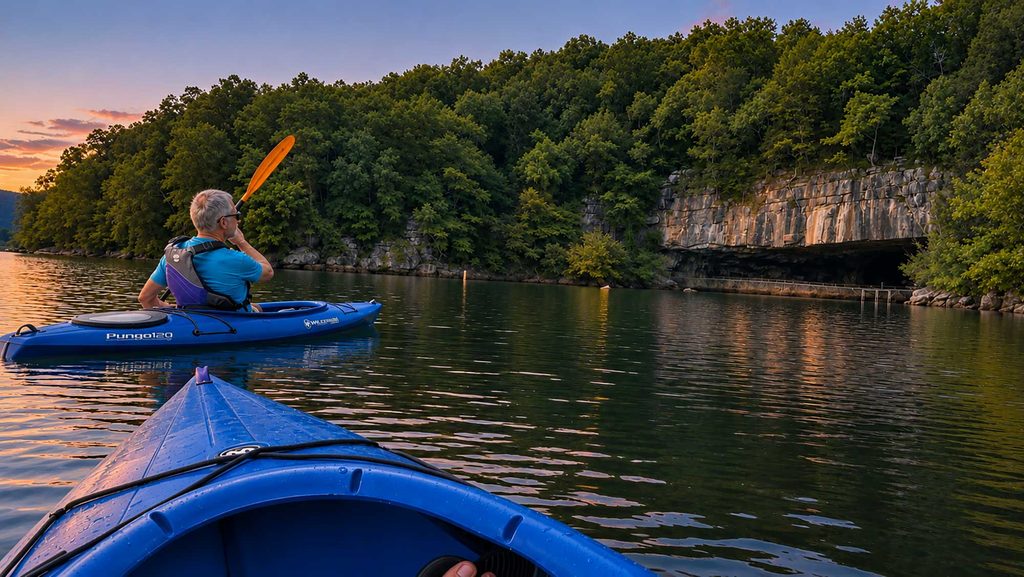
Paddle to the bat cave. From the boat ramp at Maple View Day Use Area in New Hope, the cave is only a short paddle by kayak, canoe or paddleboard. Local outfitters such as Chattanooga Guided Adventures run guided sunset trips in season if you’d rather not go it alone.
Walk the boardwalk. No boat? A 1,000-foot boardwalk leads from the Maple View parking area through the woods to an observation platform overlooking the cave mouth. Maple View has picnic tables and a pavilion, and it’s open 6 a.m. to 9 p.m. Central Time, April through October.
Fish. Nickajack is a solid multi-species lake. Anglers target largemouth, smallmouth and spotted bass, plus crappie, catfish, sauger and striped bass. Rocky banks, submerged wood and the waters near Nickajack Dam are popular spots.
Picnic and fish at Shellmound. TVA’s Shellmound Recreation Area near Jasper has a fishing pier, easy shoreline access and wide-open water views, which makes it a good pick for families and big groups (Marion County).
Explore Hales Bar. The old Hales Bar Dam powerhouse still stands at Hales Bar Marina & Resort in Guild. Dam Whiskey Co. operates inside and offers tours of the powerhouse and its tunnels, with a heavy dose of ghost stories (Tennessee Vacation). The marina also rents boats and floating cabins.
Cruise the Gorge. Upstream, the lake runs through the Tennessee River Gorge, often called the Grand Canyon of Tennessee. Wide water and steep forested ridges make it a scenic stretch for a pontoon day.
When to Visit
| Season | What’s happening |
|---|---|
| Spring (late April to May) | Bats return to the cave; Maple View opens for the season; bass fishing picks up |
| Summer (June to August) | Peak bat numbers in June and July; prime paddling, swimming and boating weather |
| Fall (September to October) | Bats thin out before heading to cooler caves; fall color in the Gorge; haunted tours at Hales Bar in October |
| Winter (November to March) | Maple View closed; quiet water for anglers working deep structure |
For the bat flight, plan to be in place around sunset. The bats often don’t appear until about 30 minutes after the sun goes down, and they tend to follow the tree line along the shore, so look up.
Planning Tips for Groups
- Getting to the bat cave: Maple View is in New Hope, about 25 miles from downtown Chattanooga. Take I-24 west to exit 161 (Haletown), turn left on Highway 156, and drive about 5 miles. Maple View is on the left just past the lake.
- Mind the time zone: Maple View’s posted hours run on Central Time, while Chattanooga is on Eastern. Some tour outfitters run on Eastern, so double-check before you book.
- Pack light but smart: Bring headlamps for the walk or paddle back, bug spray, water and a light layer. Restrooms at Maple View are basic, with a portable outhouse.
- Split the group: Paddlers can launch from the ramp while non-paddlers take the boardwalk, and everyone sees the bats.
- Fishing licenses: Tennessee requires a fishing license for anyone casting a line.
- Respect the refuge: The cave entrance is fenced for a reason. Keep your distance, keep lights low and let the bats do their thing.
Nickajack Cave and Its Famous Bats
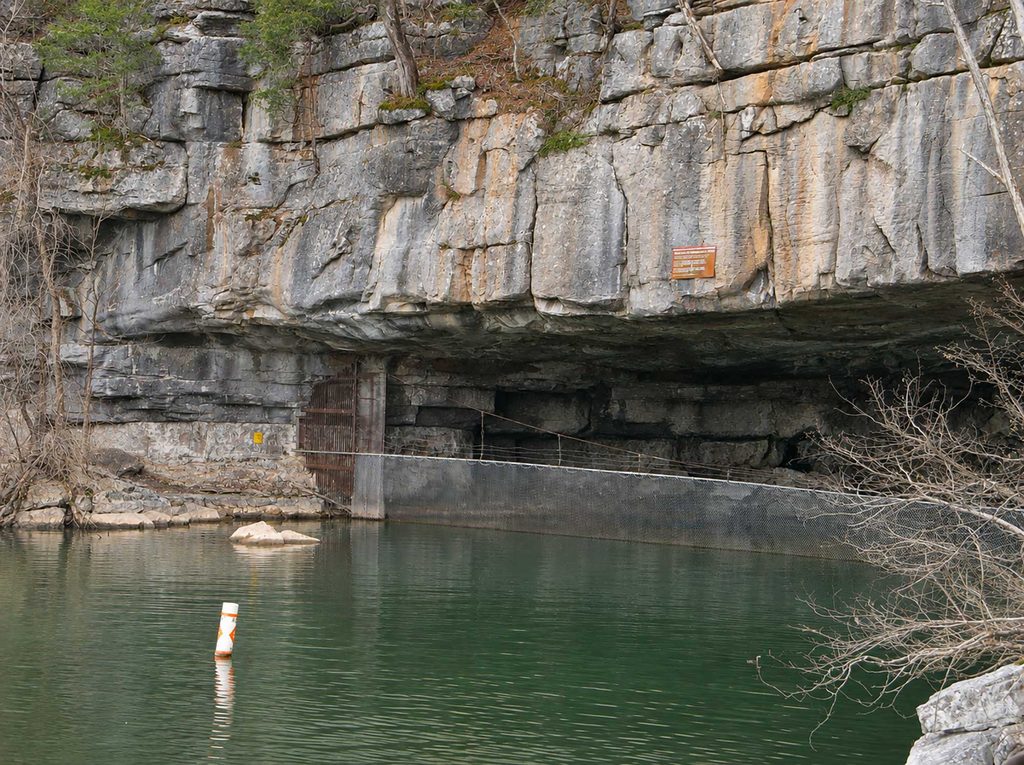
Think of Nickajack Cave as a summer nursery. Every spring, pregnant gray bats, a federally endangered species, fly in to raise their pups, and every evening from late April to early October they pour out at dusk to feed over the water. On peak summer nights, estimates put the stream at more than 100,000 bats, and the exit can last about 45 minutes (Southeast Tennessee Tourism).
The colony is also a hardworking pest control crew. The bats are estimated to eat around 274,000 pounds of insects a year, mostly mayflies and stoneflies off the river.
The cave has a long human story too:
- It sheltered Native Americans and, later, river pirates.
- It supplied saltpeter for gunpowder in the War of 1812 and the Civil War.
- Commercial boat tours ran into the cave on and off starting in 1872.
- When the lake filled in 1967, water flooded the entrance, shrinking it from about 50 feet high to 20 to 25 feet.
- In 1981 the entrance was fenced to keep boats out, and in 1992 it became Tennessee’s first non-game wildlife refuge.
You can’t go inside, but you can watch the show from the water or from a viewing platform on shore.
Where It Is and How It Came to Be
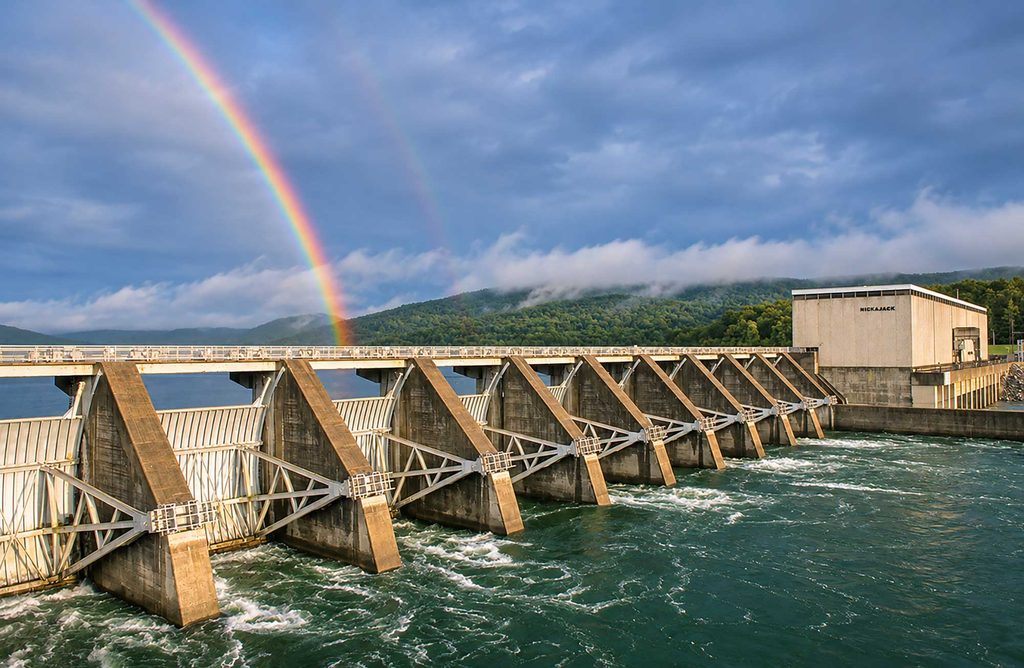
Nickajack Lake runs from the base of Chickamauga Dam in Chattanooga southwest to Nickajack Dam in Marion County, about 18 miles west of the city as the crow flies. The Tennessee Valley Authority (TVA) operates it as one step in its chain of river reservoirs, and it covers about 10,370 acres with 179 miles of shoreline (TVA).
The lake exists because of a dam that would not stop leaking. Hales Bar Dam, finished in 1913, was the first dam built across the main stem of the Tennessee River. It sat on soft, cavernous limestone, and water seeped through its foundation almost from day one. Engineers pumped hot asphalt into the rock in 1919, and by 1931 a study measured leakage of about 1,000 cubic feet per second. TVA took over the dam in 1939 and spent more than $3 million fighting the leaks (TVA history).
In 1964, TVA gave up and started over. It built Nickajack Dam about 6.4 miles downstream on sounder rock, and it remains the only dam in the TVA system built to replace an existing hydro plant. The dam closed in December 1967, and the rising water created the lake you see today.
The name reaches back much further. Nickajack was a Cherokee town near the cave, destroyed along with neighboring Running Water by territorial militias in 1794. That town site now lies under the lake.
Make It a Weekend
Nickajack Lake rewards people who slow down. Spend the morning fishing off Shellmound, the afternoon touring a haunted powerhouse, and the evening watching a cloud of bats lift off the river. It’s an easy day trip from Chattanooga, and an even better reason to book a group stay nearby and turn one evening on the water into a whole weekend.
Sources
Popular Posts

Adventure stays here